
What is Theatre Production Photography?
Stage production photography is there to create images that reflect the on stage performance. Essentially the purpose of stage Production photography is for two things. Firstly, the aim is to promote the show in future marketing and is likely to be used on social media, posters and brochures. The images can also be used to promote the production company. Secondly, it acts as a archive of the performance. Once the run is over, most production companies (and performers) want a record of the show so the photography becomes a lasting reminder of all the creative work that went into it. This includes the lighting, costume and the stage design.
I generally photograph productions during the dress rehearsal as it allows me to move around and try and get the best angles (despite the seating often getting in the way but I am well practiced at clambering over seats quickly). I might sometimes make notes of a scene and then, at the end of the rehearsal, see if a scene can be recreated with a few minor changes – this isn’t always possible as actors might no longer be in the right costume or the set may have changed. The best option, in my opinion, for a production photography photoshoot is having a specific performance just for the photos. This then allows me to stop the action if needed and slightly tweak placements and positioning for the best dramatic effect in the image. It also eliminates dress rehearsal issues of the stage changing or performers changing costume if I try to recreate a scene at the end.
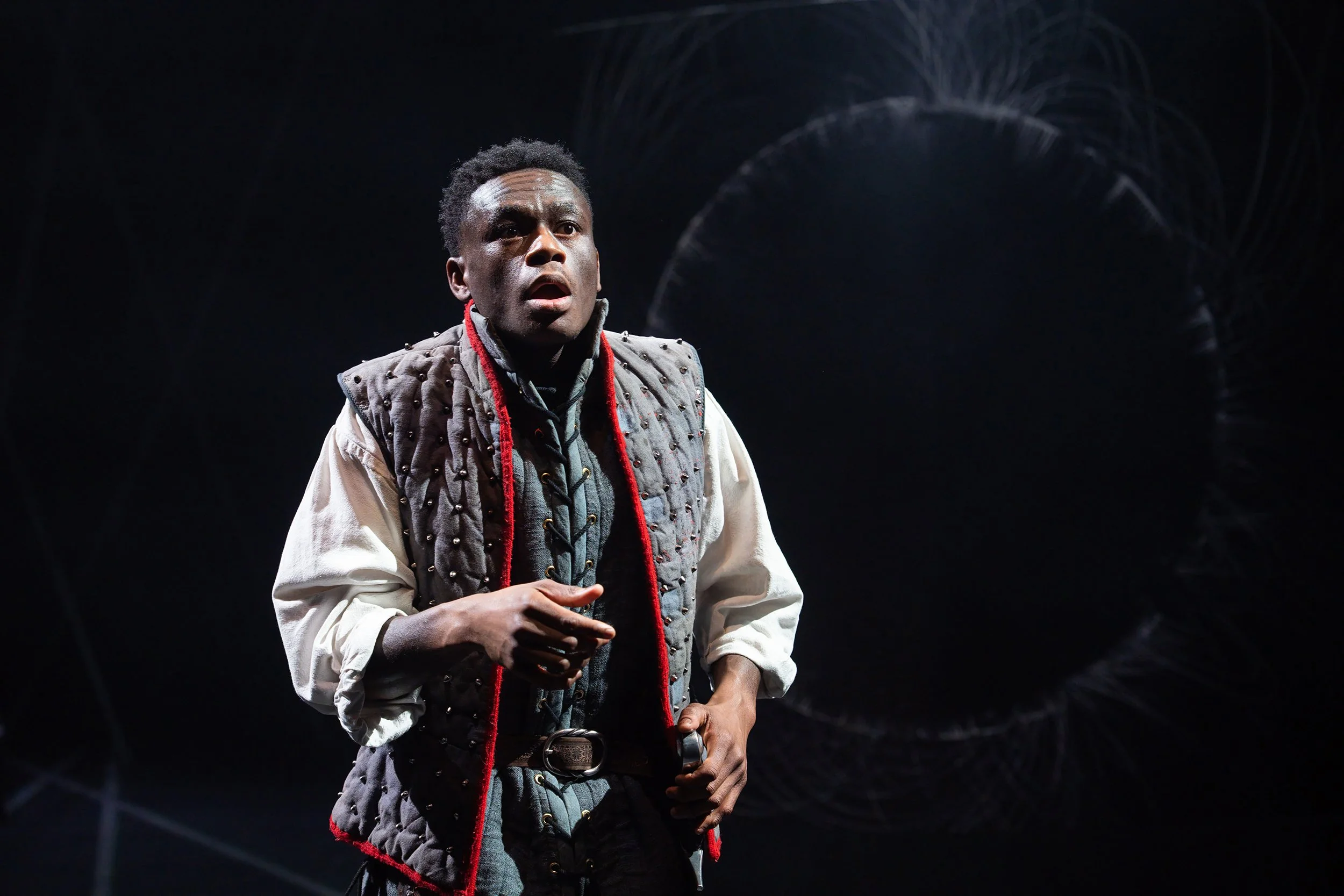
Macbeth
There are plenty of technical issues to contend with whilst shooting on stage production imagery. Mainly it is the lighting that causes issues, Mixtures of LED and tungsten give colour casts on the skin tones that our eyes don’t pick up. The main issue, however is the photographers favourite of the refresh rate on the lighting (flicker / banding). To eliminate the issue the shutter speed needs to be changed to be ‘in sync’ with the refresh rate however that changes as the lights change so it is a constant battle to spot issues and change settings. With performers fast movements that occur in dance shows and musical theatre productions in particular you then have to balance the risk of motion blur along side the constant banding / flicker battle from the lighting. This whole issue is magnified hugely if it is a live performance being photographed with audience members nearby which then forces the photographer to use a silent electronic shutter….
Documenting a theatrical performance, musical theatre show, dance, or music production isn’t just about being in the right place at the right time and hoping for a great shot. I don’t get to control the lighting or the actors positioning but I have to respond to it. I don’t know what it coming next but I do have to try and anticipate it and move quickly.
When I arrive my first question is always “what is the lighting like” as low and dramatic lights (especially with any fast-paced action) is a challenge that I like to be prepared for!
Ultimately the aim is to provide a rounded view of the show, including a mix of wide shots to show the scale of the set and tighter, more intimate shots that focus on expression and emotion. Together, they should give a complete sense of the production as a whole.
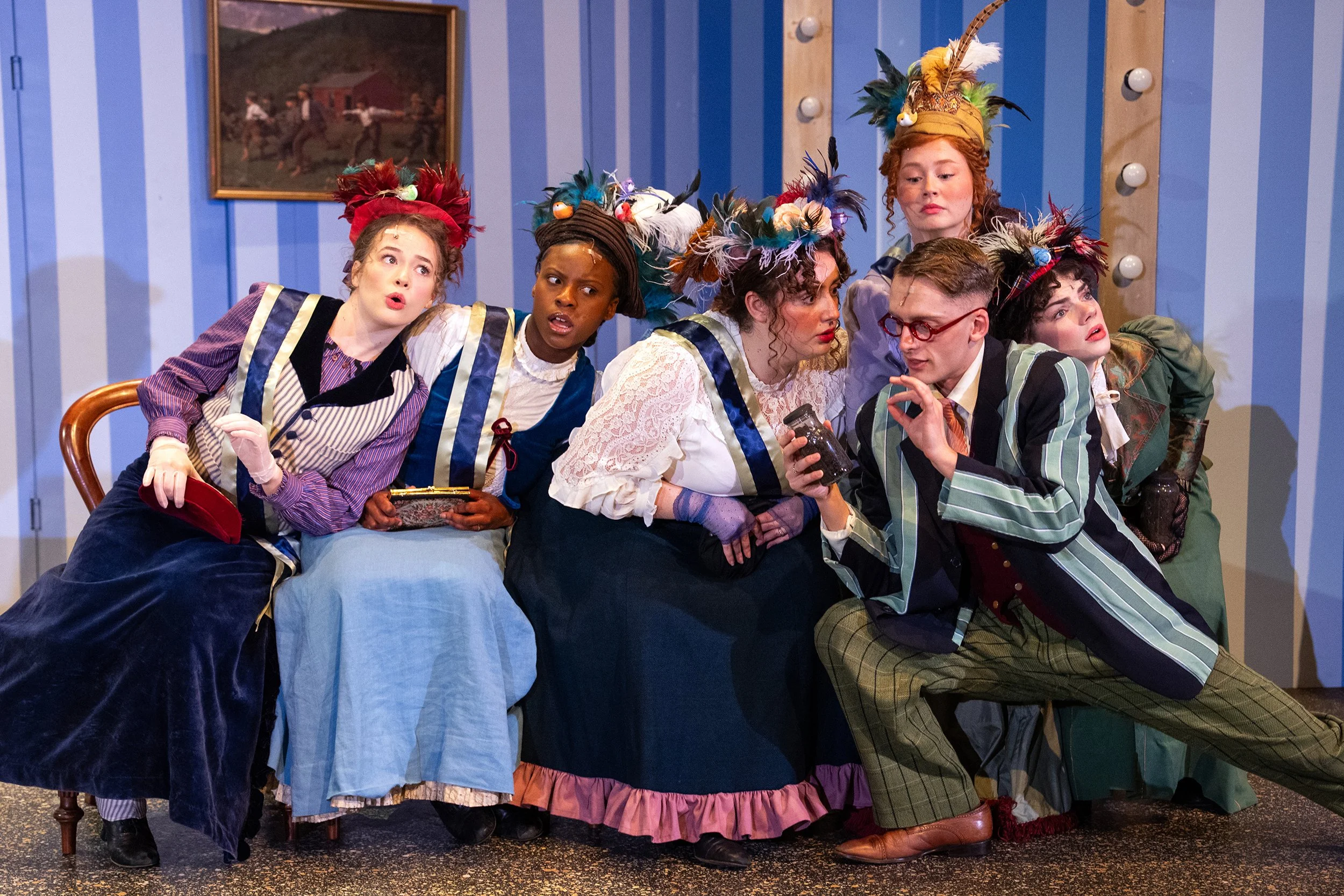
High Button Shoes